Inside The Building
Drips In A Row
Several drips line up under one purlin line after heavy rain.
On The Roof
Every screw in that row has a dried or split washer. Water follows the threads, so the whole row gets new oversized fasteners.
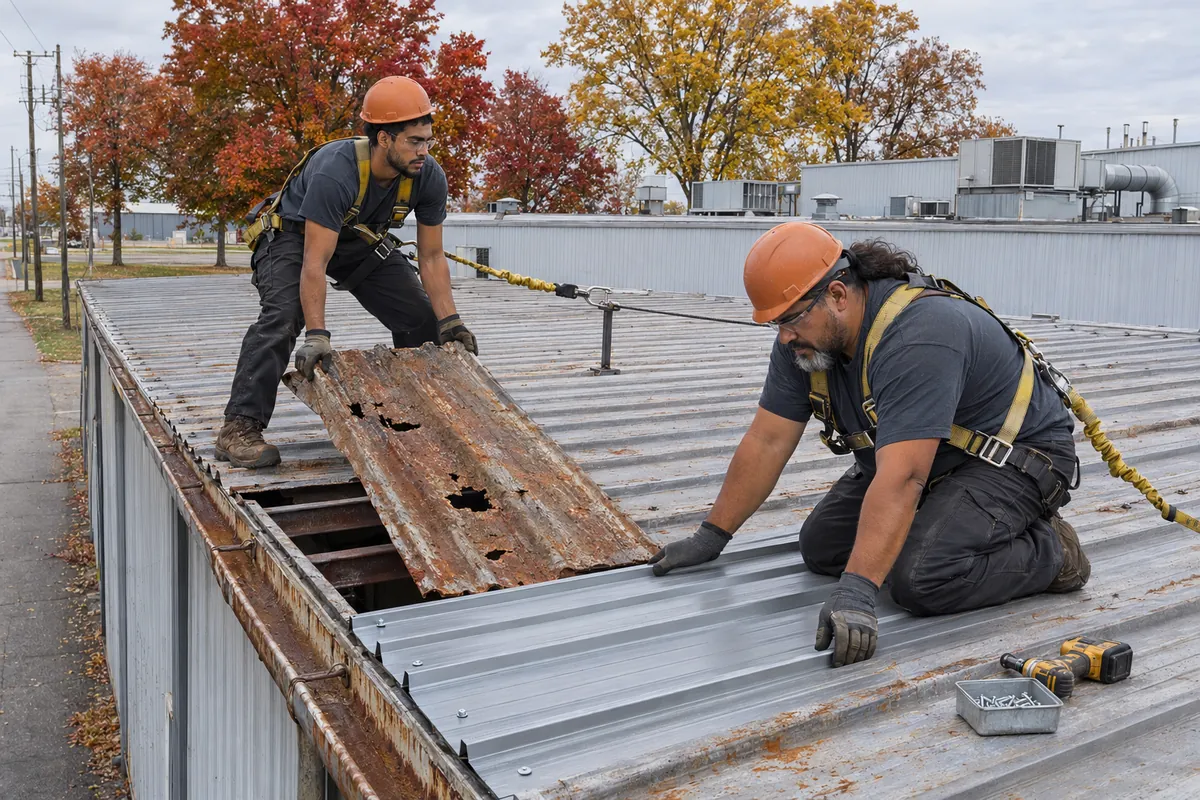
As an Evansville commercial metal roof repair contractor, we replace rusted panels, swap failed fasteners, and seal laps and trim on steel roofs over warehouses, shops, and plants.
Evansville commercial metal roof repair covers most steel roofs where the panels and framing still carry weight. Check where your roof falls below.
| Roof Condition | Repair Fits When | Bigger Work First When |
|---|---|---|
| Panel rust | Surface rust at laps, ridges, or around screws | Holes through panels along most runs |
| Fasteners | Washers split or screws backed out | Screw holes stripped across large areas |
| Framing | Purlins straight and firm from inside | Purlins rusted thin or bent |
| Laps and seams | A few laps spread or standing seams lifted | Laps open along whole panel runs |
| Trim and flashing | Loose or bent pieces at eaves and walls | Flashing rusted through around the whole roof |
What shows up inside a metal building, and what it points to on the panels above.
Several drips line up under one purlin line after heavy rain.
Every screw in that row has a dried or split washer. Water follows the threads, so the whole row gets new oversized fasteners.
Orange stains spread along the overlap line on the underside of the panels.
River humidity and trapped water rust the laps from inside. We treat the rust, add stitch screws, and seal the lap with butyl tape.
Pinpoints of light show through the panels when the lights are off.
Rust has gone through the steel. Those panels come out and matching panels of the same profile and gauge go back in.
Water runs down the inside face of a wall below the eave.
Eave trim lifted or a gutter overflowed backward under the panels. Refastened trim and cleared gutters stop it.
Drips appear on cold mornings with no rain at all.
Warm, damp air is meeting cold steel. That is a ventilation and insulation question, which we sort out before calling it a roof leak.
Most metal roof repairs fall into one of these six jobs, often done together on one visit.
Backed-out and stripped screws are replaced with oversized fasteners and new washers, row by row, so every hole seals again.
Spread laps get stitch screws and butyl tape or reinforced seam fabric. Standing seams get re-crimped and their clips reset where wind lifted them.
Panels rusted through are removed and replaced with the same profile and gauge, lapped and fastened into the panels around them.
Ridge, eave, rake, wall, and curb flashing get refastened or replaced with matching metal, and old sealant comes off before new goes on.
Yellowed or cracked translucent panels set into the metal run are replaced, with new closures and sealant at both laps.
Pipe boots and curbs cut into metal panels get new flashing that follows the panel ribs so water flows around them.
These are the before and after conditions owners see on metal buildings.
Before The Repair
After The Repair
Call and tell us which bay is dripping. We go straight to the panels and screws above it.
Call UsSend photos from inside and out. We count the panels and price the repair.
Get An EstimateFive decisions in order, from the first look to the last screw.
We walk the panels, check screws, laps, trim, and penetrations, and look at the framing from inside the building.
Firm framing and panels with limited rust mean yes. Rust through most panel runs means a bigger conversation.
Each panel with holes gets marked, and replacements are ordered in the same profile and gauge.
Laps get stitch screws, then butyl tape or seam fabric, and standing seams get re-crimped.
A final pass checks each fastener row, and photos of the work go into your roof file.
Metal roofs often meet other roof types and other problems. These services cover them.
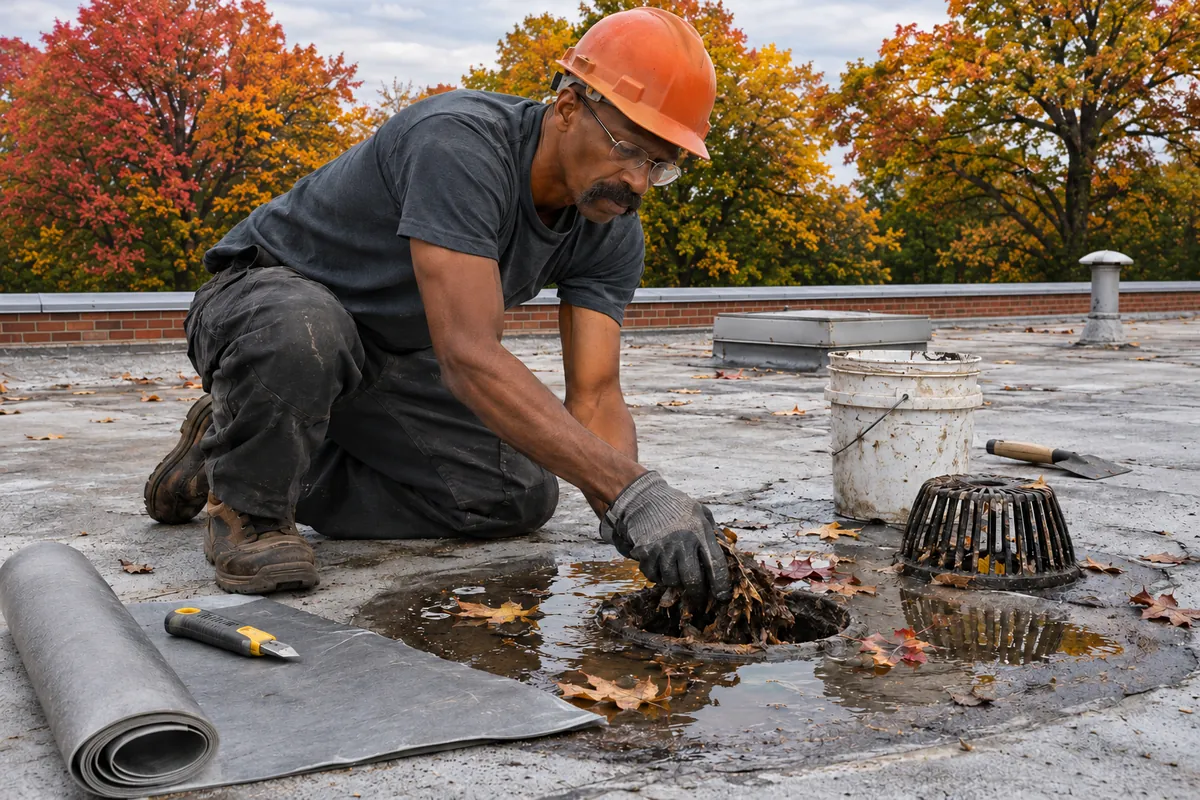
A flat addition beside a metal building leaks at its drains and seams. Flat roof repair handles the membrane side of the building.
Typical Repairs
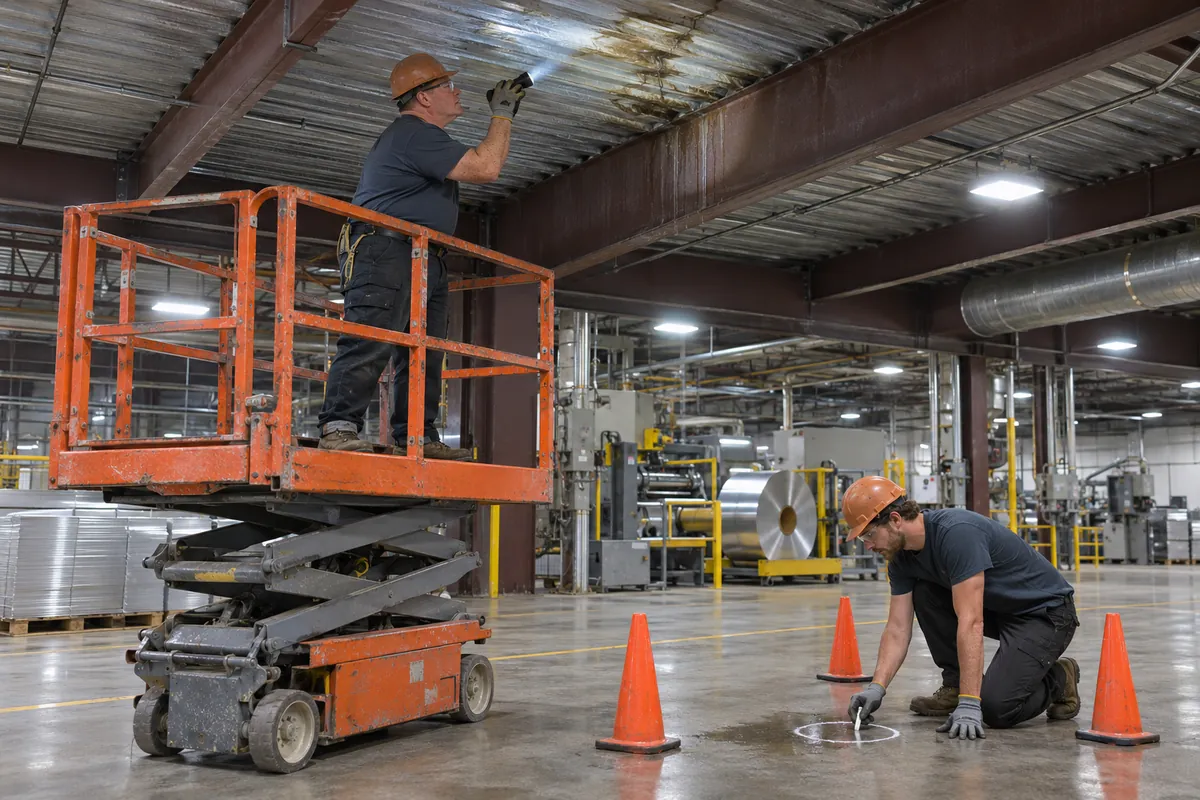
When water shows up far from any obvious rust, a full leak trace follows it back across the purlins to the real entry point.
Typical Repairs
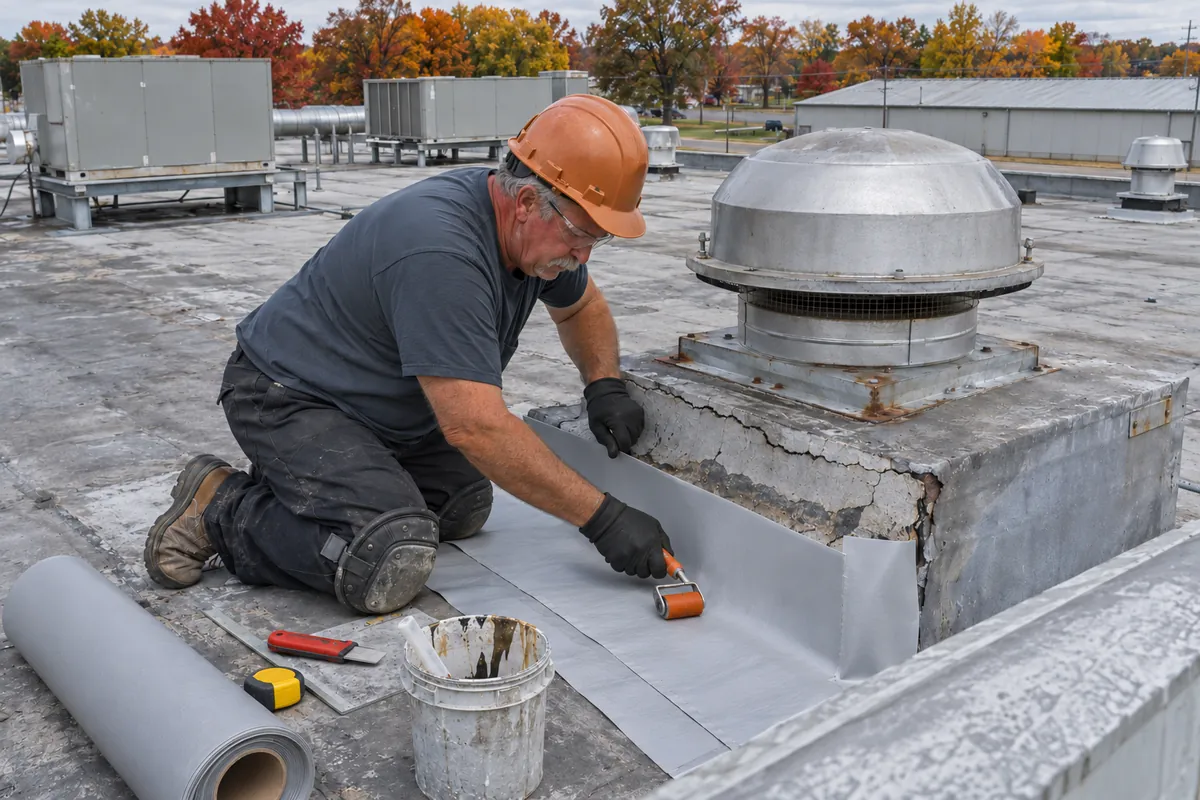
Steel plant roofs with exhaust fans and heavy units need repairs staged around running equipment and plant safety rules.
Typical Repairs
Answers on seams, lifespan, and repair versus replacement.
Repair Or Replace
Most can be repaired when the framing is firm and rust has not gone through most panels. Fasteners, laps, trim, and single rusted panels are all repairable. Once rust holes run across many panels or purlins have rusted thin, replacement becomes the better money. A look at panels, purlins, and screws settles it.
A well-kept commercial metal roof often reaches 30 years or more, with panel type, gauge, and finish setting the range. Humid summers and river moisture make rust treatment and fastener checks matter more here. Clean gutters, sealed laps, and quick screw replacement keep a roof toward the long end.
Seams And Flashing
Clean the lap, tighten or add stitch screws where it spread, and seal it with butyl tape, mastic, or reinforced seam fabric. River humidity rusts laps faster, so corrosion at the seam gets treated before any sealant goes on. Standing seam roofs can need seams re-crimped and clips reset.
Flashing at ridges, eaves, walls, and curbs moves with every hot day and cold night, which loosens its screws and cracks its sealant. Refastening, fresh sealant, and replacing rusted pieces with matching metal keep water from running behind it.
Fasteners
Once a year is a good habit, plus after any strong windstorm. Washers dry out and screws back out a little each season. Replacing a handful of failed screws early costs far less than replacing the wet insulation they let water into later.
Send photos of the panels or the drip, or call. We check every screw row above the leak and price the repair.
Or call (930) 346-3218