
Inside The Building
Puddles That Sit For Days
A slow drip shows up near columns or along a beam line two days after rain.
On The Roof
Water stands around a drain set too high or over a sagging deck, and the membrane seams in that ring wear first.
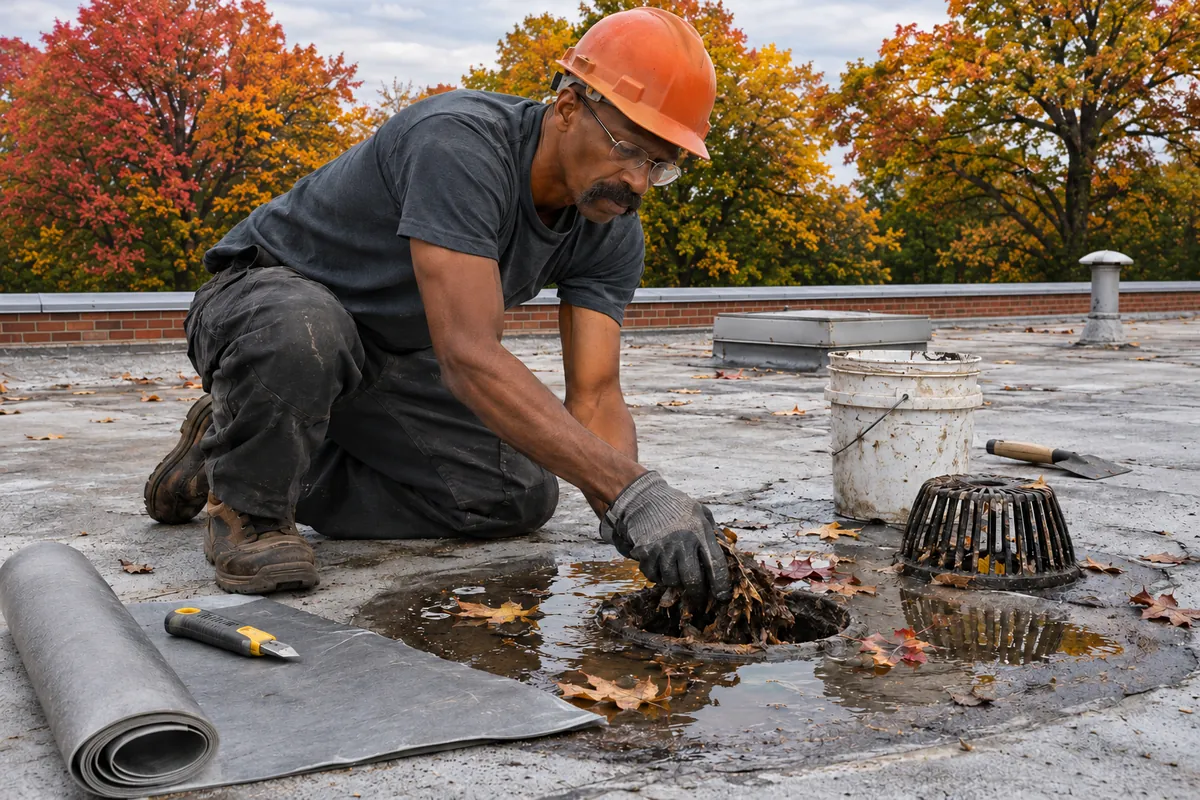
As an Evansville flat roof repair contractor, we patch seams, rebuild drains, and cut out wet insulation on TPO, EPDM, built-up, and modified bitumen roofs.
Evansville flat roof repair works on most low-slope roofs that still flex and take a patch. This table shows where a repair goes straight on and where more work comes first.
| Roof Condition | Repair Fits When | Bigger Work First When |
|---|---|---|
| Membrane surface | Still flexible and takes a weld or primer | Brittle, crazed, or cracking across the field |
| Insulation | Dry in cores outside the damaged area | Wet in cores across a whole roof area |
| Drains | Bowl sits low and only the ring or flashing failed | Deck sags so water never reaches the drain |
| Seams | A few laps opened near traffic or a curb | Laps failing faster than they can be patched |
| Earlier patches | One or two neat patches in matching material | Layers of tar and mastic covering the field |
Each pair shows what staff notice inside and what we usually find on the flat roof above.
A slow drip shows up near columns or along a beam line two days after rain.
Water stands around a drain set too high or over a sagging deck, and the membrane seams in that ring wear first.
Water collects on the floor right under the roof drain pipe inside.
The clamping ring is loose or cracked, or the membrane tore at the bowl, so water slips around the drain instead of into it.
Ceiling tiles near the bubbles stay dry at first, then stain once a blister cracks.
Moisture trapped between layers swells in summer heat and lifts the membrane into a blister that eventually splits.
Stains form in a straight line, following the direction of the roof sheets.
Laps on TPO were never fully welded, or seam tape on EPDM has let go, and wind pushes water into the gap.
Leaks return to the same spot every spring even after several repairs.
Mastic over a welded or taped roof never bonds to it, so water runs under the old patch and keeps coming in.
Which repair goes on depends on the membrane and where it failed. These are the repairs we make most on flat roofs.
Strainer, clamping ring, and bolts get replaced, the bowl gets new membrane flashing, and low areas around it are built up so water reaches the drain.
TPO takes hot-air welded patches, EPDM takes primed tape and cover strips, and built-up roofs take compatible plies over the cleaned area.
Cracked blisters are cut open, dried, re-adhered, and covered with a matching patch. Cores around them check for trapped water in the insulation.
Wet insulation found by cores is cut out to the edge of the dry boards, replaced, and covered with new membrane tied into the old field.
Loose edge metal and lifted termination bars are refastened or replaced, so wind cannot catch the membrane edge in the next storm.
Tapered insulation or crickets go in under new membrane where water sits, steering it toward the nearest drain or scupper.
The changes below show up on the roof and in the building once the repair is in.
Before The Repair
After The Repair
Call and tell us which room has the drip and whether a drain sits above it. We check that drain first.
Call UsSend photos of the puddles or patches. We map the low spots and price the repair.
Get Free EstimateFive questions answered in order on every flat roof.
We walk the roof after rain where possible, mark every ponding ring, and check each drain, seam, and edge.
Cores beside the damage and a moisture meter show how far water spread under the membrane.
Membrane type and age decide the patch: welded, taped, or built up in compatible plies.
Drains and low spots get fixed in the same visit, since patching under standing water only buys time.
Every opening is sealed before we leave, and photos of each patch go into your roof file.
When the problem reaches past the membrane, one of these services usually picks it up.
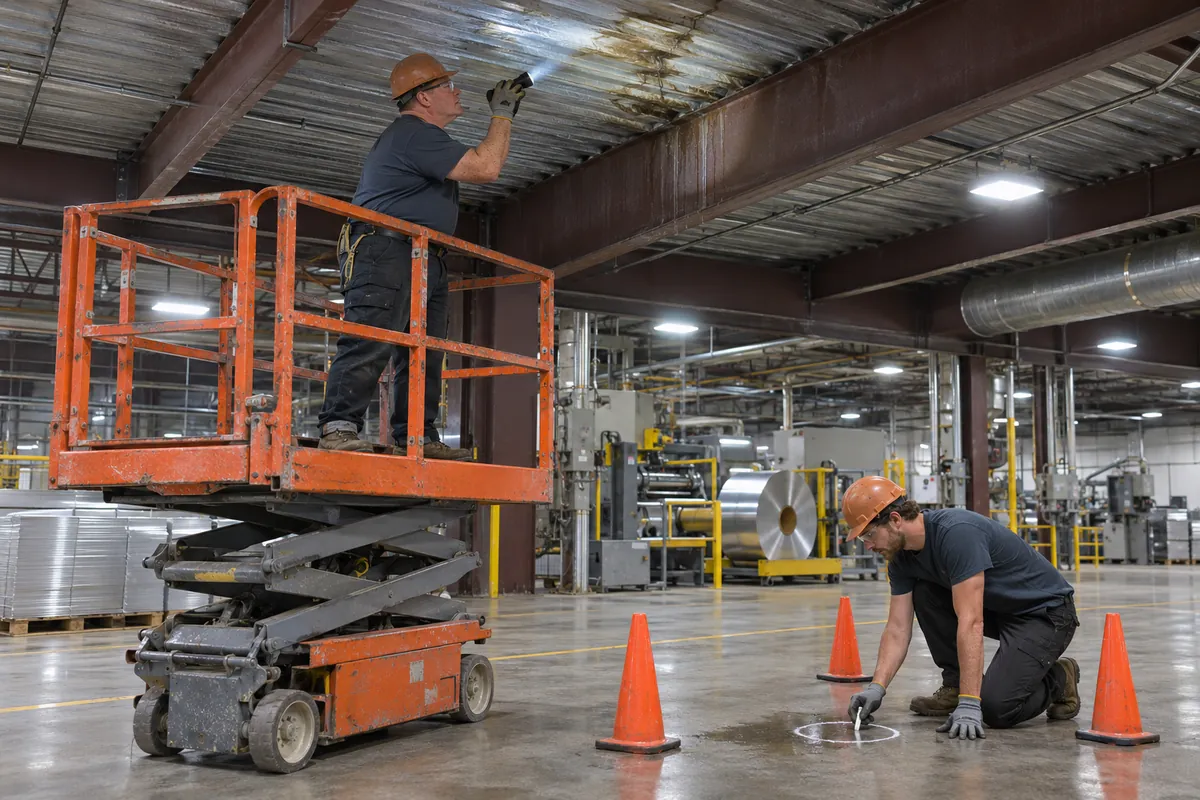
If a stain keeps moving after a patch, the water is entering somewhere else. Leak repair follows the path from the ceiling to the true entry point.
Typical Repairs
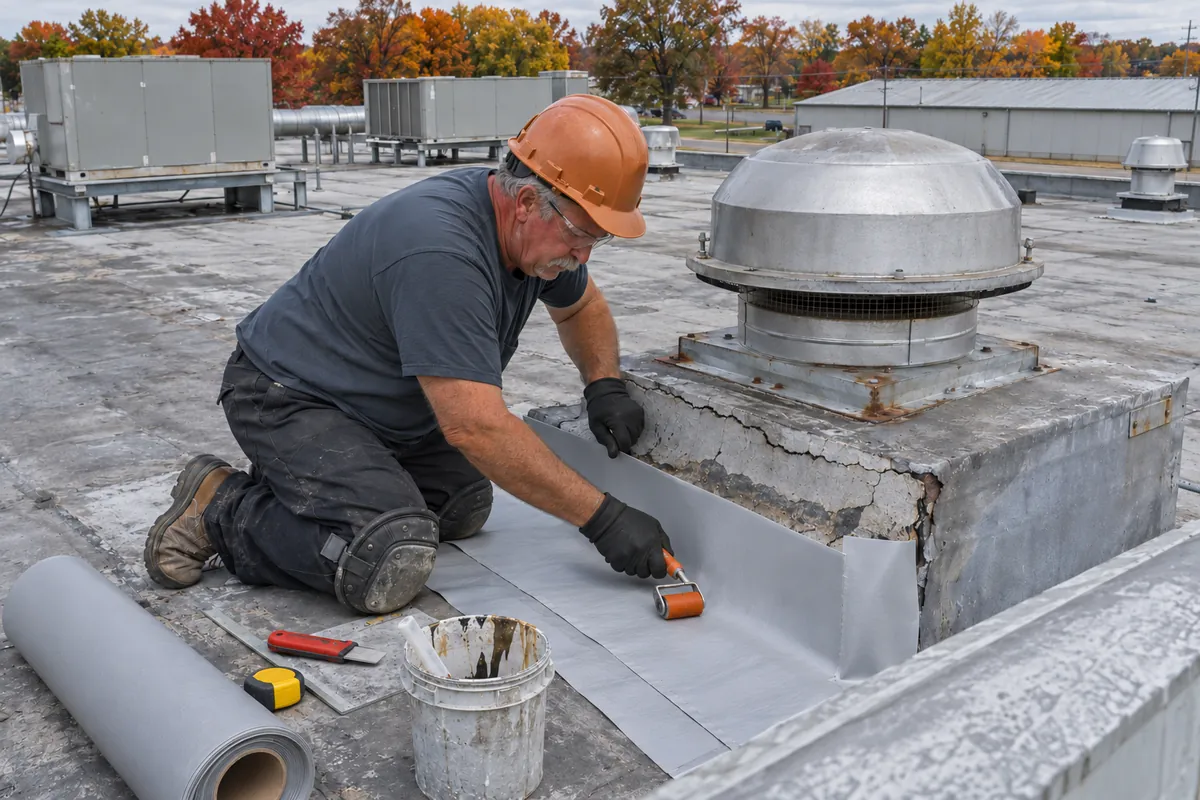
Plant roofs with exhaust and heavy units need repairs planned around production, with protection under every opening in the roof.
Typical Repairs
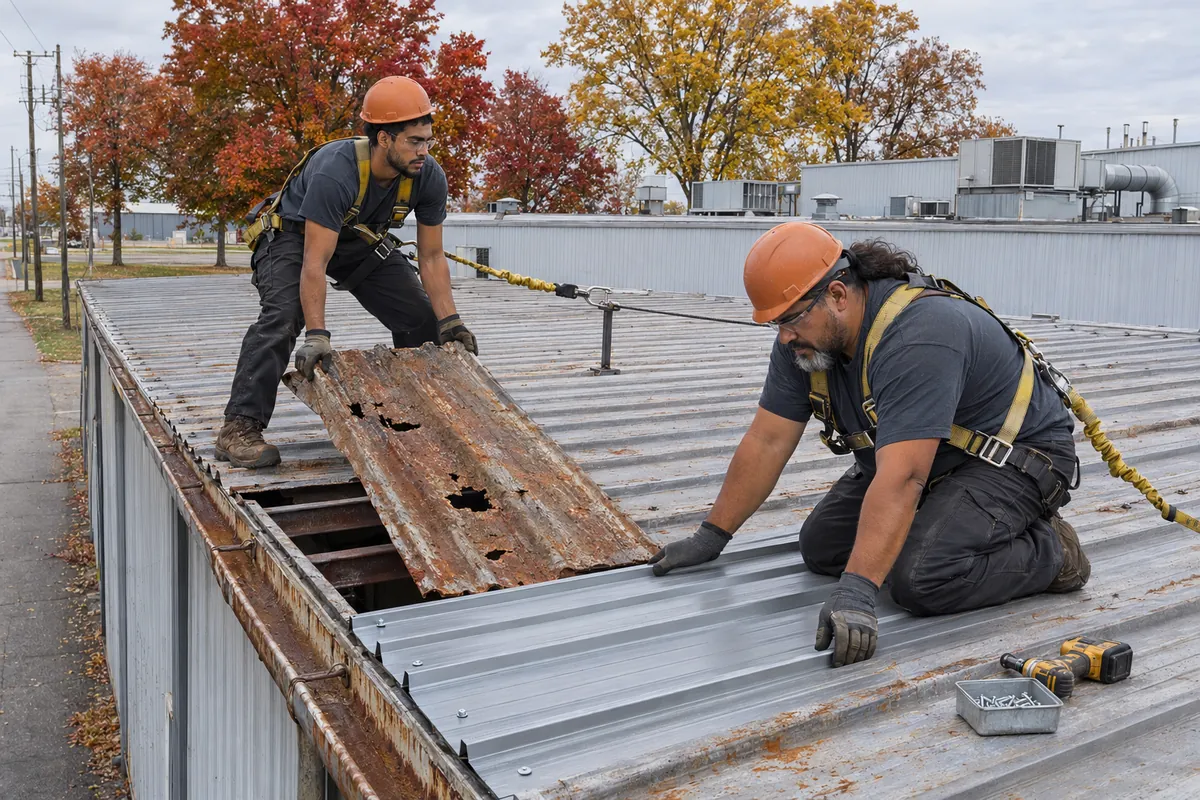
Many buildings join a flat roof to a metal addition. The transition flashing between them is a common leak point we repair together.
Typical Repairs
Straight answers on cost, methods, and drains.
Cost
Price follows the size and number of damaged areas, the membrane type, how much wet insulation comes out, any drain or deck work, roof height, and access. Cold or wet weather can add steps. An on-site estimate measures each of those and sets a price for your roof.
For damage limited to a few areas, yes. A repair touches only the failed details and the boards around them. Once cores show wet insulation across a large part of the roof, the repair bill climbs close to a re-cover, and we show you both numbers in writing.
Methods
Match the patch to the membrane already there: welded TPO patches, primed tape on EPDM, or compatible plies on built-up and modified bitumen. Clean the area, cut out wet insulation, and run the patch well past the damage onto firm membrane. Mismatched patch material is the most common reason the same spot leaks again.
Small blisters that have not split get marked and watched. Cracked or large ones are cut open, dried, glued back down, and covered with a patch of the same material. We cut a core beside each one, since a cluster of blisters often means water trapped in the insulation.
Drains
Clear the drain, then check the clamping ring, bolts, strainer, and the membrane flashing at the bowl. A loose ring, torn membrane at the bowl, or a drain set high causes most drain leaks. New hardware and flashing go in, and the area around the bowl is built up so water drains instead of pooling.
Send the address and where the water shows up. We check the drains and seams above it and price the repair in writing.
Or call (930) 346-3218