
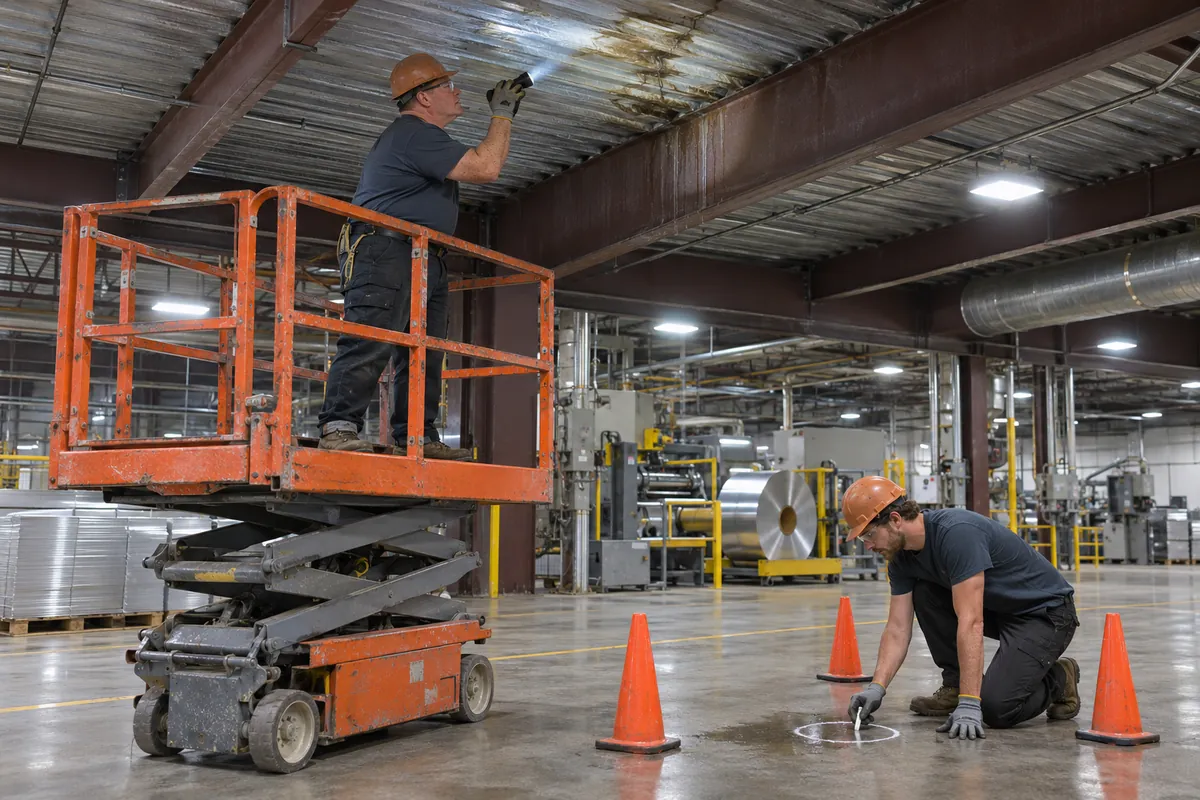
A Stain Far From Any Equipment
A ring forms in the middle of an open ceiling with nothing on the roof directly above it.
Water entered upslope at a seam or boot and ran along the deck flutes. We follow the flute line uphill to find it.
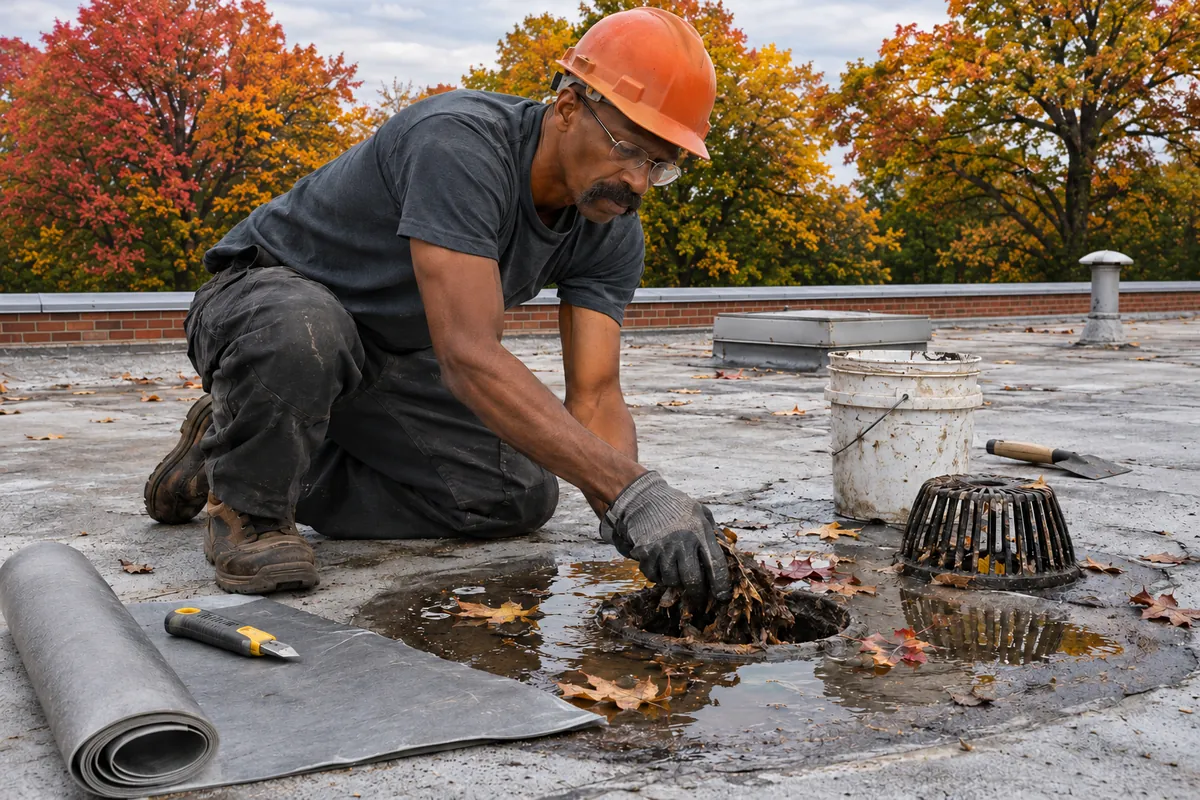
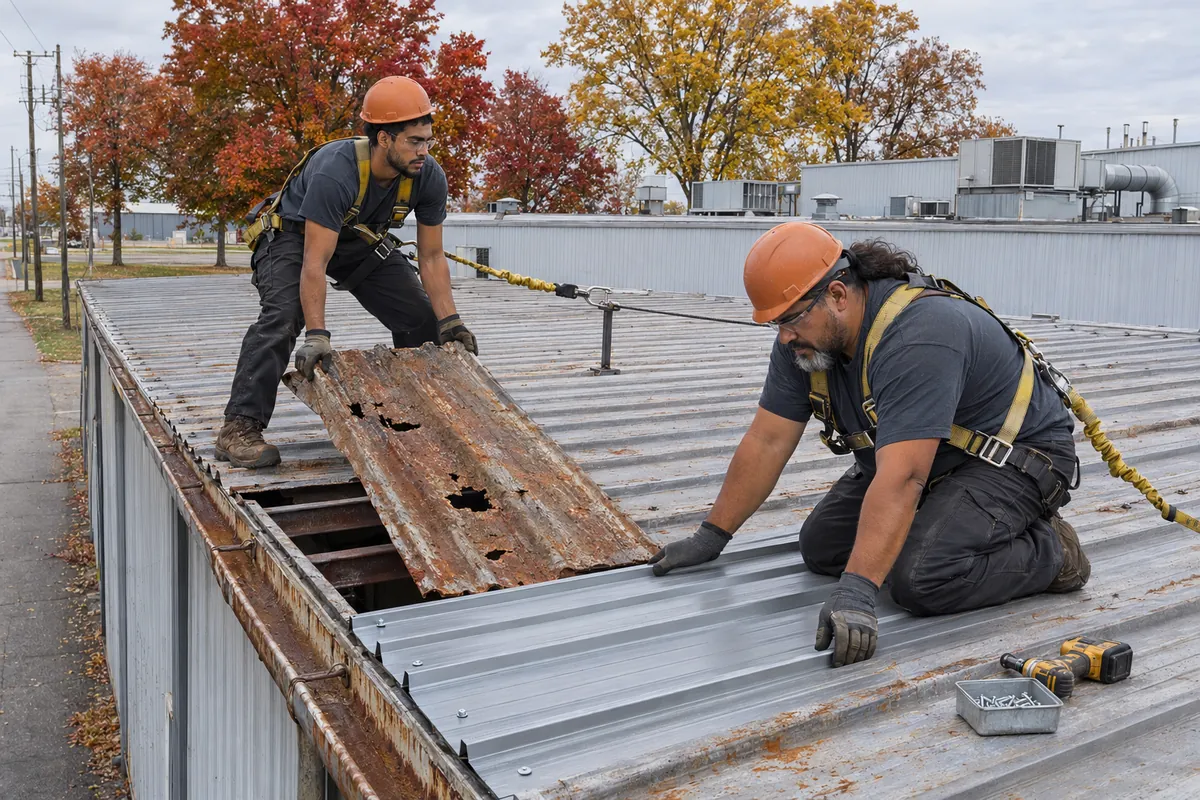
As an Evansville commercial roof leak repair contractor, we trace water from the stain inside to where it enters the roof, then repair that seam, curb, wall, or drain.
Evansville commercial roof leak repair starts wherever water is getting in, on any roof type. This table shows when a leak repair is enough and when the roof needs more.
| Roof Condition | Repair Fits When | Bigger Work First When |
|---|---|---|
| Where water shows | One area of ceiling or wall | Stains across many rooms at once |
| Entry points | One or two details upslope of the stain | Seams and flashing failing all over |
| Insulation | Wet only along the leak path | Wet across most cores |
| Timing | Leaks only in heavy rain or snowmelt | Leaks in every light rain |
| History | First leak in that area | The same spot patched many times |
Where water shows inside rarely matches where it enters. These pairs connect the two.
A ring forms in the middle of an open ceiling with nothing on the roof directly above it.
Water entered upslope at a seam or boot and ran along the deck flutes. We follow the flute line uphill to find it.
Water comes in on sunny winter days while rainstorms stay dry.
Meltwater backs up behind ice at drains and gutters and rises over seams and low flashing that stay dry in rain.
A wet streak runs down the inside face of an exterior wall.
Coping joints opened or base flashing pulled away, letting water into the parapet and down the wall cavity.
Ceiling tiles near a supply duct stain after storms and on humid days.
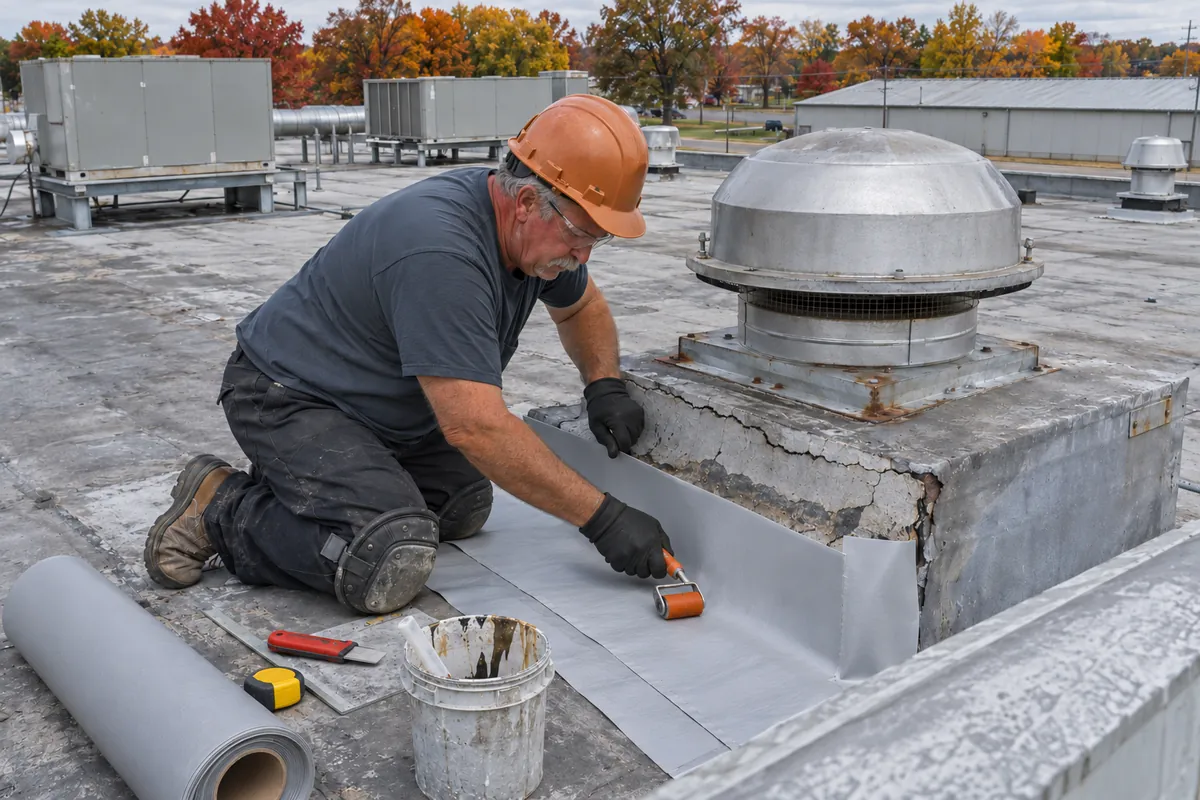
Curb corners cracked, the unit access panel lost its gasket, or condensate drains onto the roof and backs under the curb flashing.
Drips form along the skylight frame or the ceiling right beside it.
The skylight curb flashing failed, or the dome seal dried out. We test which before choosing the repair.
Once we know where water gets in, the repair matches that detail.
Coping joints are resealed or replaced, base flashing is re-adhered, and termination bars and counterflashing keep water from running behind the membrane.
Cracked curb corners and pipe boots get new flashing in the same membrane, and condensate lines are routed so they drain off the roof.
Drains and gutters are cleared, low flashings raised, and the seams where meltwater backs up are sealed before the next freeze.
Laps that let water in are welded, taped, or stitched to match the roof, and the boards along the leak path are checked by core.
Curb flashing around skylights is rebuilt and dome seals replaced, with the curb height checked against the roof surface.
When the roof is wet or frozen, a temporary seal stops the drip, and the permanent repair follows once the roof dries out.
Before and after, as staff and tenants see it.
Before The Repair
After The Repair
Call and tell us where water lands and what is above it. We talk through interior protection while we plan the trace.
Call UsSend photos of the stain and past repair invoices. We find the entry point and price the fix.
Schedule Free InspectionFive steps that find the real entry point before anything gets patched.
We start at the stain inside, note the deck direction, and walk the roof above it from the low side up.
Seams, curbs, boots, drains, and walls upslope get checked, and cores along the path show how far water traveled.
If the roof is wet or frozen, a temporary seal stops the drip until it is dry enough for the permanent repair.
The detail that failed gets rebuilt in the same material, along with any wet boards on the leak path.
Where it makes sense, we water-test the repair and send photos showing the entry point and the finished work.
A leak often points to work on the roof around it. These services handle that work.

When the leak sits at a drain or a ponding area, flat roof repair rebuilds the drain and builds up the low spot around it.
Typical Repairs

On steel buildings, the entry point is often a row of failed screws or an open lap that needs panel work to close.
Typical Repairs

Leaks over production lines need repairs planned with plant staff, with protection over equipment and product below.
Typical Repairs
Answers on cost, leases, snowmelt, and parapet walls.
Cost And Leases
Price follows how hard the leak is to trace, the roof system, how many entry points there are, how much wet insulation comes out, and access. Leaks at parapets, curbs, and drains take more detail work than a puncture in the open field. An on-site estimate finds the real leak and prices that repair.
Often, yes, but the lease decides. Many commercial leases put roof leaks on the landlord, while net leases can shift them to tenants. Tenants should report leaks in writing right away to limit damage to stock and finishes. Our report records the entry point and the repair so both sides can sort out landlord responsibility for roof leaks.
Snow And Walls
Meltwater runs toward drains and gutters still plugged with ice, backs up, and rises over seams, flashing, and screw heads that stay above normal rain. Clearing drains, sealing seams, and raising low flashing before winter stops most of these leaks.
Find which part of the wall lets water in: coping joints, cracked masonry, open base flashing, or missing counterflashing. Then reseal or replace the coping joints, re-flash the base, and add termination bars and counterflashing so water stays in front of the membrane.
First Steps
Move stock and electronics out from under the drip, set buckets on plastic, and take photos of the stain and the ceiling around it. Note the time and the weather. Tell us where the roof hatch is, so the trace can start right above the wet area.
Tell us where the water lands and what sits above it. We trace it to the entry point and repair that detail.
Or call (930) 346-3218