Inside The Building
Drips Over A Production Line
Water lands on equipment or product near a column line.
On The Roof
A curb under a heavy unit cracked at the corners as it vibrated, and water runs along the deck to the column.
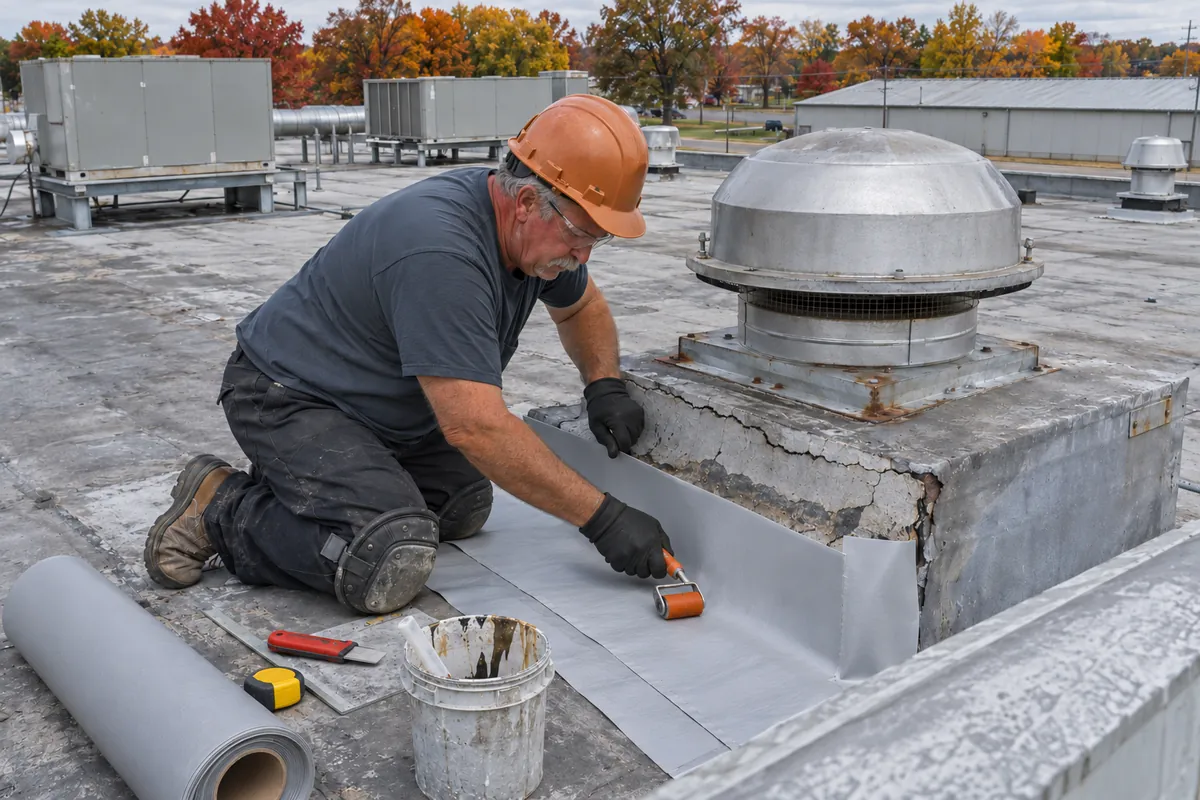
As an Evansville industrial roof repair contractor, we repair plant and warehouse roofs around exhaust, ductwork, and heavy curbs, with work planned around shifts.
Evansville industrial roof repair fits most plant roofs where damage clusters around equipment and traffic. See where your roof falls.
| Roof Condition | Repair Fits When | Bigger Work First When |
|---|---|---|
| Exhaust areas | Residue damage near a few stacks | Membrane softened across a whole bay |
| Curbs and units | Cracked corners on some curbs | Curbs rotted or too low across the roof |
| Walk paths | Worn membrane along service routes | Traffic wear over most of the field |
| Insulation | Wet only near the damaged details | Wet across most cores |
| Production | Repairs can be staged between shifts | Work needs a planned shutdown window |
What plant staff see on the floor, and what it usually means on the roof.
Water lands on equipment or product near a column line.
A curb under a heavy unit cracked at the corners as it vibrated, and water runs along the deck to the column.
Ceiling panels near process exhaust stain and sag.
Oily or chemical residue softened the membrane around the stack, and the flashing collar split.
New drips start after HVAC or electrical work on the roof.
Dropped tools, dragged equipment, and new penetrations cut or punctured the membrane along the work route.
Rainwater runs down the inside of the loading dock wall during storms.
Water ponds along the high dock wall where the roof slope ends, and the base flashing there has opened.
Areas of the plant stay humid and smell musty after rain.
Insulation under the membrane is wet across a zone. Cores show where it starts and stops so repairs stay targeted.
Plant roofs need the same repairs as any roof, planned around what runs below.
Curbs under large units are re-flashed with reinforced corners, and units with loose service panels get new gaskets.
Residue-damaged membrane around stacks is cut out and replaced, and new flashing collars go on each penetration.
Walkway pads are welded or adhered along the routes technicians use, so foot traffic stops wearing through the membrane.
A full walk of the roof with photos and cores produces a repair list ranked by urgency, so work fits your budget cycle.
Wet zones mapped by core are cut out and rebuilt in sections sized to close before the shift changes.
Material lifts are planned around docks, yards, and traffic, with safety setups near running machinery.
How the roof and the floor below change once repairs are done.
Before The Repair
After The Repair
Call and tell us which line or bay is getting wet. We plan protection and the trace before we arrive.
Call UsSend the plant address and shift schedule. We set up an inspection that fits your production.
Get A Free EstimateFive decisions, made with plant staff before work begins.
We walk the whole roof with plant staff, check every curb, stack, and drain, and cut cores where readings run high.
Production lines, product storage, and air intakes under each repair area decide the protection and timing.
Openings are sized to close before shift change, and odorous work is timed away from intakes.
The ranked list puts active leaks over equipment first, then wet zones and worn routes.
Photos of each repair, the materials used, and an updated list of what remains.
Large buildings usually need more than one type of repair. These services cover the rest.
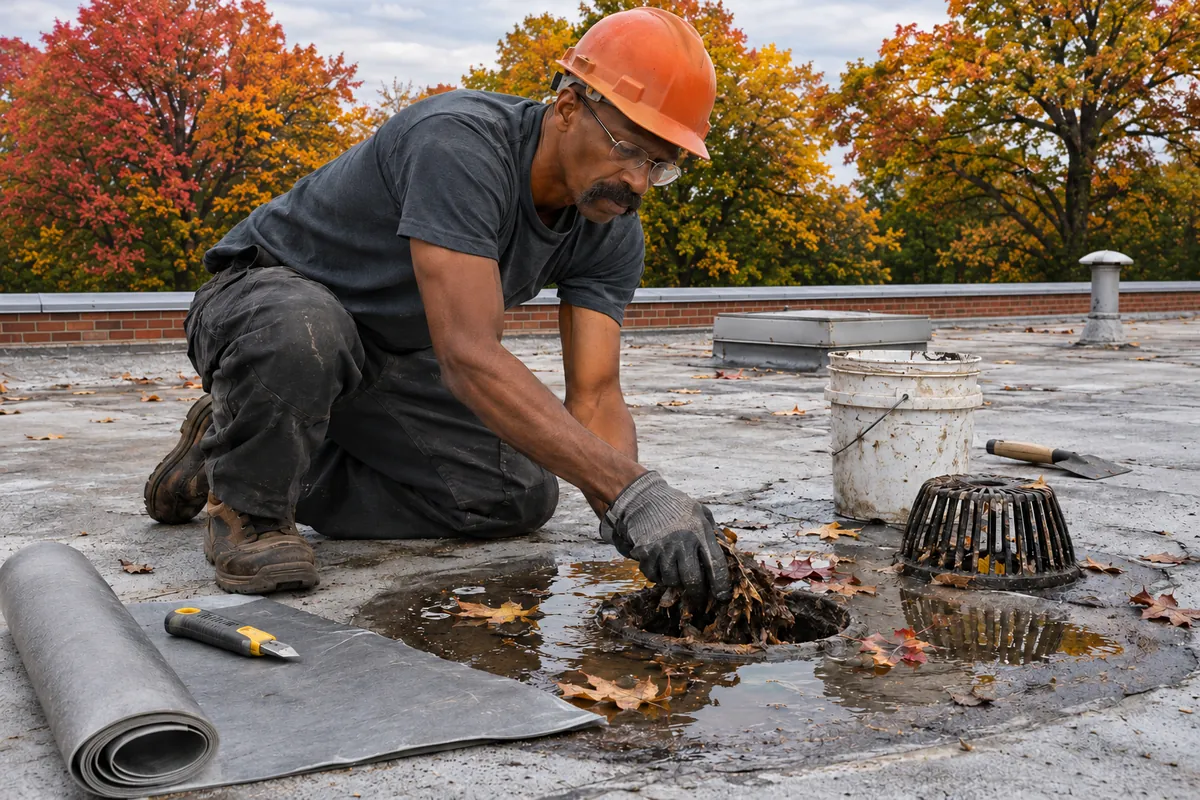
Long, flat plant roofs pond along dock walls and around drains. Flat roof repair rebuilds those drains and low spots.
Typical Repairs
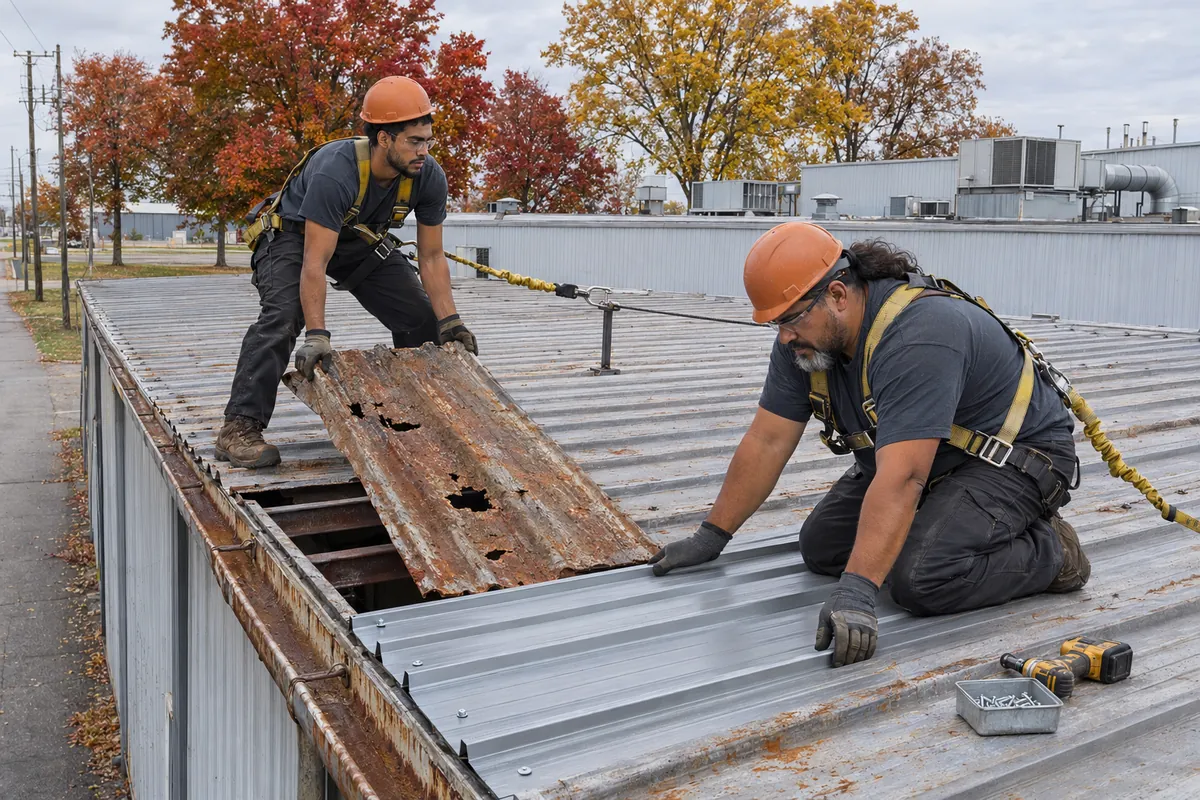
Warehouses and plant additions with steel roofs need fastener and panel work matched to their profiles.
Typical Repairs
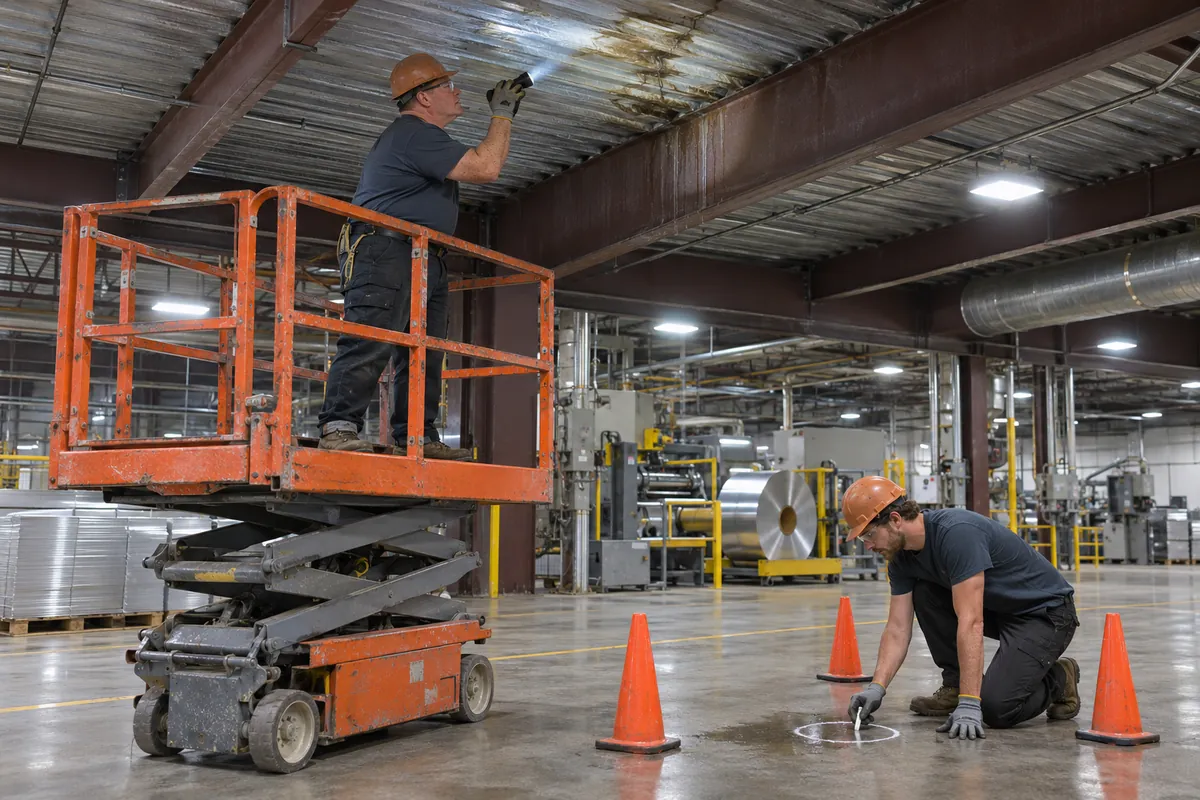
A single drip over a production line gets a full trace so the right detail is repaired the first time.
Typical Repairs
Answers on inspections, cost, and working over production.
Inspections
The whole roof gets walked: membrane or panels, seams, flashing, drains, curbs, ducts, and equipment supports, with extra attention to heat or residue damage near process exhaust. Cores or a moisture scan check the insulation where needed. You receive photos and a repair list ranked by urgency, so the work fits around production.
Twice a year, in spring and fall, plus after hail or a major windstorm. Plant roofs see more foot traffic and equipment work than most, so the inspection also checks the routes contractors use and any new penetrations added since the last visit.
Cost
Roof size and height, how much damage there is, the roof system, rooftop equipment, and working around running production all set the price. Crane or lift access and safety setups near machinery add steps. An on-site estimate looks at your roof and prices it.
Working Over Production
Usually, yes. Repairs are planned with the plant: protection under the work area, openings sized to close before shift change, and shutdowns only for equipment being flashed. Materials and odors are timed away from air intakes and product areas below.
A roofer who works on large low-slope and metal roofs, writes a safety plan for working near running equipment, and schedules around shifts. Ask how they trace leaks, protect production below, and report what they find. Written scopes with photos make repair options easier to compare.
Send the plant address and the area that is leaking. We plan the repair around your shifts and price it in writing.
Or call (930) 346-3218